
This course is now delivered online via Zoom and Microsoft Teams. Please enquire for details.
Course description
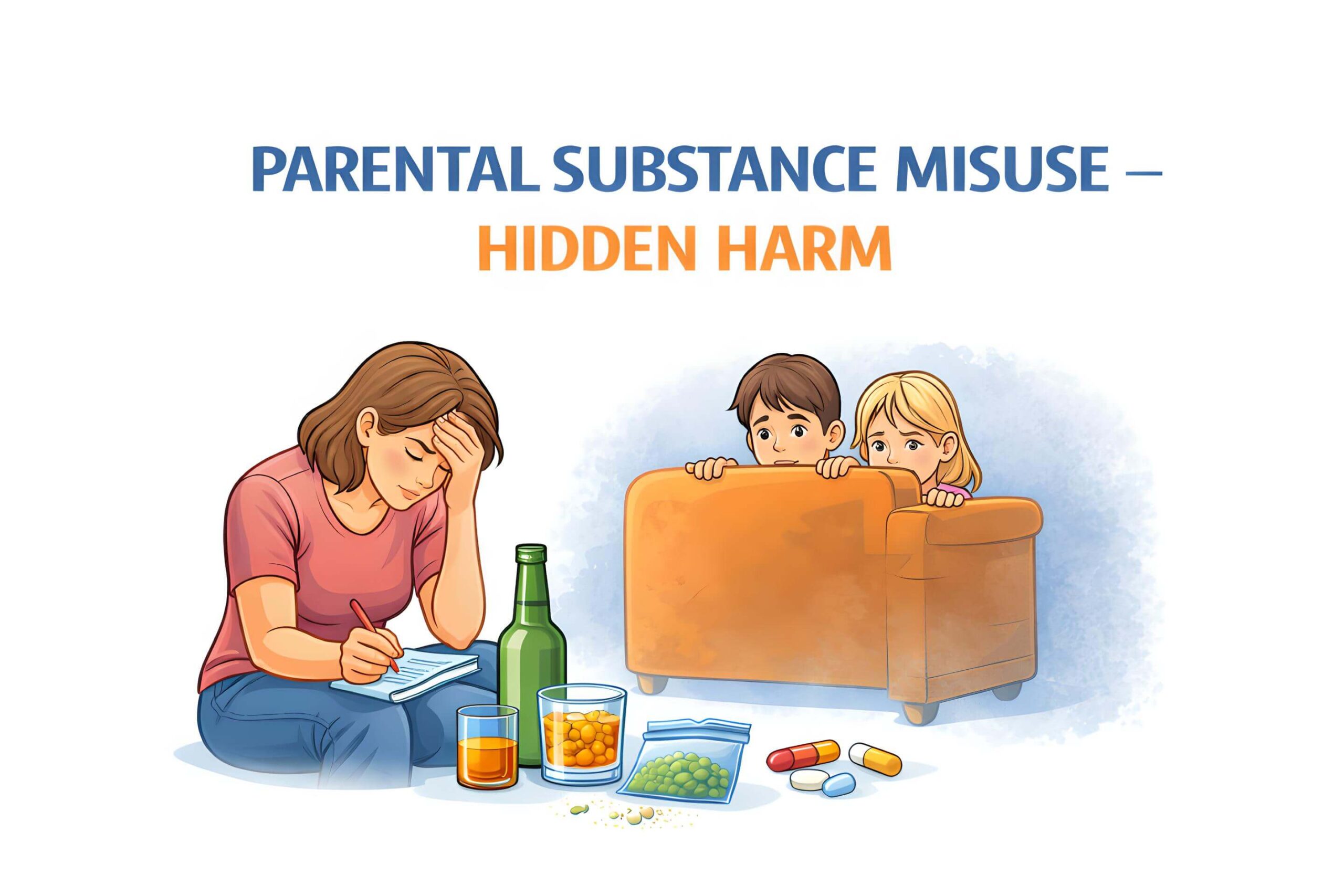
A session focuses on parental substance misuse, hidden harm and related issues.
New figures indicate that approximately 3.4 million children in the UK live with at least one binge drinking parent, 2.6 million live with a hazardous drinker and around 1 million live with a parent who uses illicit drugs.
Outline
• Overview of substances (includes alcohol, crack, heroin and commonly used NPS)
• Impact of drugs on families
• Implications for children
• Provision of need for children – asking the right questions
• Assessing the impact of drugs on parenting capacity
• Risk Factors
• Protective factors, treatment, support and making appropriate referrals
Aim & Objectives
• To increase knowledge and awareness of hidden harm
• To improved confidence in identifying and dealing with cases of hidden harm
• Understanding responsibilities when working with a parent / s who use drugs / alcohol
• Identifying risk and assess the impact drugs and alcohol can have on parenting capacity
• Increase protective factors for parents and children
• Improved knowledge of signposting routes to help address identified hidden harm
The course will be accompanied by a training package and certificate on completion of the training.
Testimonial – Parental Substance Misuse
“We are a team of 5, who support year 7 to 6th form with all levels and areas of mentoring and 1st aid, in a large Academy just outside of Slough, joining us in the training a few SEN staff and teachers. The training was extremely well received and all who took part were fully engaged right up until the end. Tony showed that he was extremely knowledgeable on the subject and this made the day interesting, with a few areas where we could engage in scenarios as well. Tony`s delivery was in tune with the teams needs and although it’s a serious subject, we were able to have some laughs as well.”
Capability Framework Alignment
This course aligns with the Capability Framework for the Drug and Alcohol Treatment and Recovery Workforce (NHS England/ OHID, 2024), which underpins the 10-Year Strategic Plan for the Drug and Alcohol Treatment and Recovery Workforce 2024–2034.
| Capability Domain (NHS England / OHID, 2024) | Framework Section |
| Knowledge of the nature and scale of hidden harm in the UK, including estimates of children affected by parental problematic drug use (250,000–350,000) and parental alcohol use (780,000–1.3 million) | Drug and Alcohol Worker: Application of Knowledge |
| Knowledge of how parental drug and alcohol use affects parenting capacity, family functioning, child development and children’s safety and wellbeing | Drug and Alcohol Worker: Application of Knowledge |
| Knowledge of environmental risk factors associated with parental substance use, including domestic abuse, poverty, housing instability and social isolation | Drug and Alcohol Worker: Application of Knowledge |
| Ability to recognise indications of substance misuse in parents and carers and refer appropriately to specialist drug, alcohol and family support services | Drug and Alcohol Worker: Engagement, Assessment and Care Planning |
| Ability to use appropriate tools and frameworks to assess parenting capacity and the impact of substance use on provision of need for children | Drug and Alcohol Worker: Engagement, Assessment and Care Planning |
| Ability to ask sensitive, effective questions when working with families affected by hidden harm, maintaining a child-centred focus throughout | Drug and Alcohol Worker: Engagement, Assessment and Care Planning |
| Ability to identify and strengthen protective factors for parents and children, and support access to treatment, recovery and family support services | Drug and Alcohol Worker: Harm Reduction, Treatment and Recovery |
| Ability to fulfil professional safeguarding responsibilities and work effectively within multi-agency frameworks when children may be at risk | Drug and Alcohol Worker: Engagement, Assessment and Care Planning |
| Recovery-oriented approach — supporting parents in treatment and recovery to build family stability, parenting confidence and recovery capital | Underpinning Principle: All Roles |
| Challenging stigma — recognising and addressing the stigma faced by parents who use drugs or alcohol, which can be a significant barrier to seeking help | Underpinning Principle: All Roles |
| Underpinning Principles Embedded in This Course Trauma-informed care • Recovery-oriented approach • Evidence-based practice • Person-centred working • Forming a working alliance • Therapeutic optimism • Challenging stigma • Co-occurring needs and multidisciplinary working |