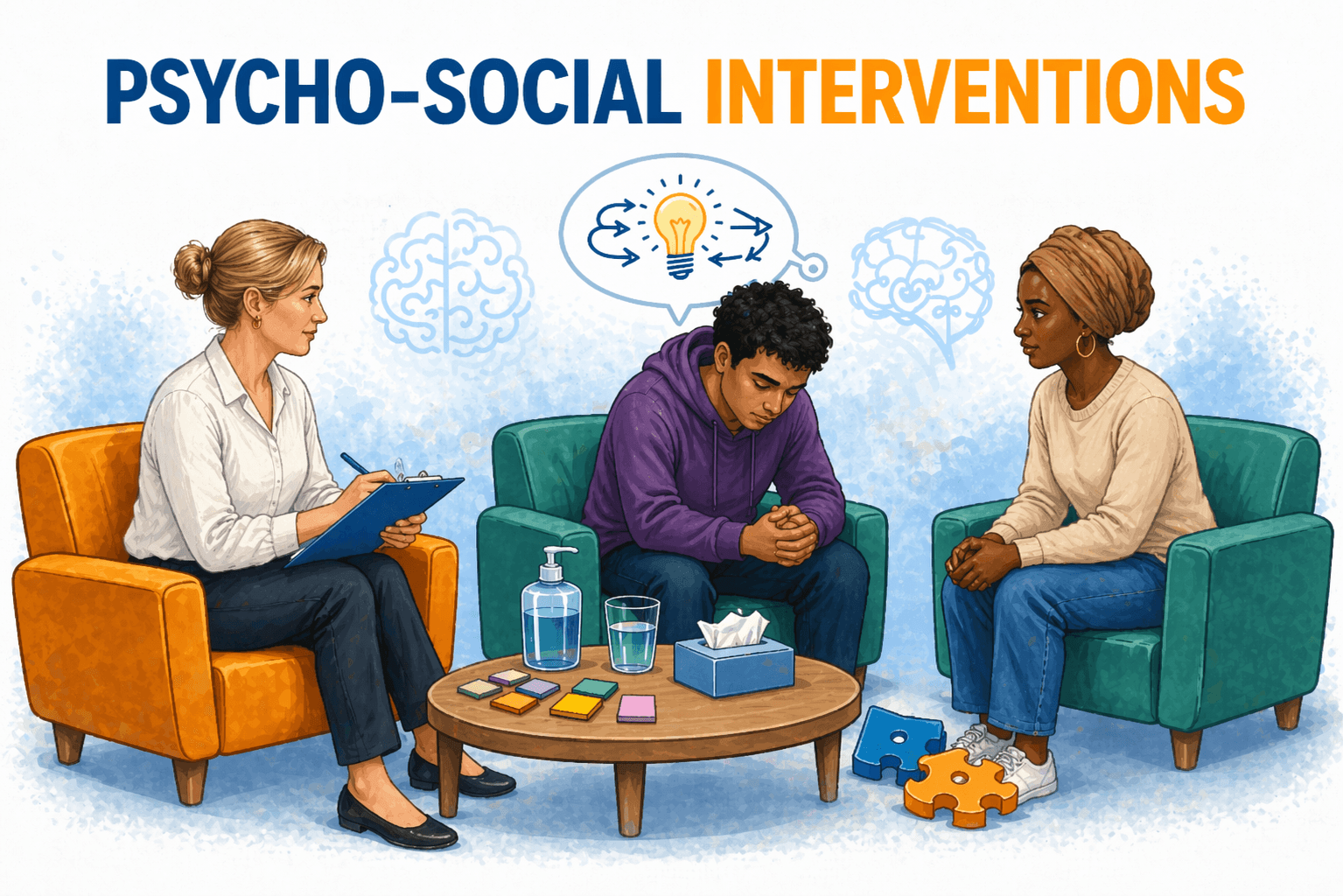
Psycho-social interventions training for professionals working with drug and alcohol users. Includes Motivational Interviewing (MI), Cognitive Behavioural Therapy (CBT) and ITEP Mapping.
NICE Guidelines for Drug Misuse and Dependency stipulates that treatment for drug misuse should always involve a psychosocial component.
Course description
A one or two session course on psycho-social interventions for drug and alcohol users. Covers motivational interviewing, cognitive behavioural therapy and ITEP Mapping.
Aims and objectives
To gain an understanding of brief psycho-social interventions and how to implement these in the workplace.
An awareness of the potential improvements in both treatment outcomes and organisational structure when applying PSIs
To gain an understanding of the worker/client process
To feel comfortable with the use of MI/CBT/ITEP and its theories
Be able to work with uncertain or ambivalent clients
Understand the key principles and attitudes on information giving and handling resistance
Be able to implement mapping and treatment tools within your current practice
Target audience:
Drug and Alcohol Recovery Workers. Community Mental Health Teams, Child and Adolescent Mental Heath staff, General Practitioners, Practice Nurses, Social Workers, Supported Housing Workers and Probation Staff.
Capability Framework Alignment
This course aligns with the Capability Framework for the Drug and Alcohol Treatment and Recovery Workforce (NHS England/OHID, 2024), which underpins the 10-Year Strategic Plan for the Drug and Alcohol Treatment and Recovery Workforce 2024–2034.
Capability Domain (NHS England / OHID, 2024)
Framework Section
Knowledge of the evidence base for psycho-social interventions (PSIs) in drug and alcohol treatment, including NICE Guidelines for Drug Misuse and Dependency (NG58) and the requirement for a psychosocial component in all treatment
Drug and Alcohol Worker: Application of Knowledge
Knowledge of the principles, spirit and key skills of Motivational Interviewing (MI), including OARS, change talk, ambivalence and the stages of change model
Drug and Alcohol Worker: Harm Reduction, Treatment and Recovery
Ability to deliver Motivational Interviewing techniques in direct work with clients, including rolling with resistance, exploring ambivalence and eliciting change talk
Drug and Alcohol Worker: Harm Reduction, Treatment and Recovery
Knowledge of the cognitive behavioural model and its application to substance use, including thought records, behavioural experiments and relapse prevention planning
Drug and Alcohol Worker: Harm Reduction, Treatment and Recovery
Ability to apply CBT-informed techniques in direct work with drug and alcohol clients to address unhelpful thinking patterns and support behaviour change
Drug and Alcohol Worker: Harm Reduction, Treatment and Recovery
Ability to use ITEP node-link mapping tools — including goal setting, guiding maps and strength-based maps — within recovery-oriented care planning
Drug and Alcohol Worker: Engagement, Assessment and Care Planning
Ability to form and maintain effective therapeutic alliances with clients, including those who are uncertain, ambivalent or resistant to change
Drug and Alcohol Worker: Engagement, Assessment and Care Planning
Ability to develop, implement and review personalised, co-produced care plans that integrate MI, CBT and ITEP mapping approaches
Drug and Alcohol Worker: Engagement, Assessment and Care Planning
Recovery-oriented approach — using PSIs to build recovery capital, personal agency and resilience alongside treatment goals
Underpinning Principle: All Roles
Challenging stigma — applying person-centred, non-judgmental PSI approaches that promote dignity and reduce the impact of stigma on engagement
Underpinning Principle: All Roles
Underpinning Principles Embedded in This Course Trauma-informed care • Recovery-oriented approach • Evidence-based practice • Person-centred working • Forming a working alliance • Therapeutic optimism • Challenging stigma • Co-occurring needs and multidisciplinary working
Note: National Occupational Standards (DANOS/NOS) are retained within the National Occupational Standards library but are no longer the primary workforce development reference for the drug and alcohol treatment and recovery sector. This course uses the NHS England / OHID Capability Framework (2024) as its primary alignment standard.