
This one or two-session course is now delivered online via Zoom or Microsoft Teams. Please enquire for details.
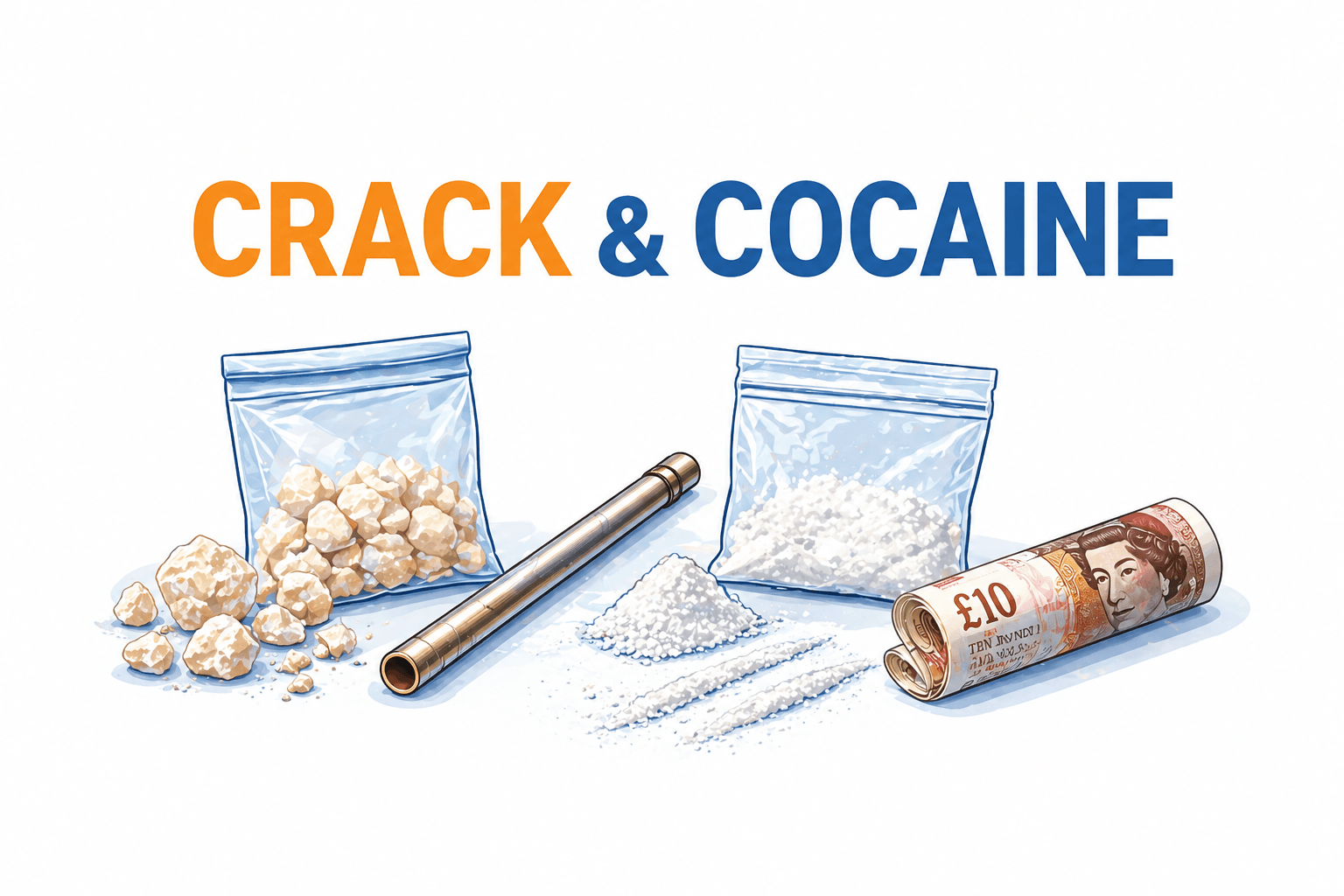
Cocaine hydrochloride (powdered cocaine) is the most commonly used Class A drug in the UK. Although crack can be found in the majority of communities across England and Wales, the level of use and harm caused varies considerably. Where levels are high, the damage caused to communities is acute. Urgent action is therefore required to reduce the levels of use in the most badly affected areas, and to stop the potential growth of the problem in other areas.
Course description
This course covers specific interventions, health, mental health issues, appropriate treatment and effective ways of working with this client group.
The course covers:
History of crack and cocaine
Current world and UK situation
Current policy/research documents
Who is using crack and cocaine
Types of cocaine
How cocaine works
Health and Psychiatric Implications
Harm Reduction
Treatment
Aims and objectives
-
Increase knowledge and awareness of the issues relating to crack and cocaine use.
-
Increase knowledge of how crack & cocaine is used and the effects upon individual’s physiology and neurology.
-
Understand the possible affects on health.
-
Understand how specific interventions at relevant stages can increase engagement.
-
Increase confidence in working with this client group.
-
Increase capability in working with this client group.
Capability Framework Alignment
This course aligns with the Capability Framework for the Drug and Alcohol Treatment and Recovery Workforce (NHS England/ OHID, 2024), which underpins the 10-Year Strategic Plan for the Drug and Alcohol Treatment and Recovery Workforce 2024–2034.
| Capability Domain (NHS England / OHID, 2024) | Framework Section |
| Knowledge of the harm associated with the physical and psychological effects of stimulants including crack cocaine and powder cocaine, patterns of use including poly-drug use | Drug and Alcohol Worker: Application of Knowledge |
| Knowledge of the nature, prevalence and patterns of cocaine and crack cocaine use in the UK, including county lines, criminal exploitation and racial equity considerations | Drug and Alcohol Worker: Application of Knowledge |
| Ability to provide evidence-based harm reduction interventions for stimulant users, including NSP, naloxone and BBV prevention in line with NICE NG225 (2024) | Drug and Alcohol Worker: Harm Reduction, Treatment and Recovery |
| Ability to deliver evidence-based psychosocial interventions including MI, contingency management and CBT-informed relapse prevention for stimulant use | Drug and Alcohol Worker: Harm Reduction, Treatment and Recovery |
| Ability to carry out comprehensive, person-centred assessments of drug use and co-occurring psychological, social, financial and physical health needs | Drug and Alcohol Worker: Engagement, Assessment and Care Planning |
| Ability to develop, implement and regularly review personalised, co-produced treatment and recovery care plans | Drug and Alcohol Worker: Engagement, Assessment and Care Planning |
| Ability to personalise care for people from different groups, including those from ethnic minority backgrounds | Drug and Alcohol Worker: Harm Reduction, Treatment and Recovery |
| Recovery-oriented approach — working with individuals to build personal, social and community recovery capital | Underpinning Principle: All Roles |
| Challenging stigma — being alert to the ways negative perceptions can influence practice | Underpinning Principle: All Roles |
| Underpinning Principles Embedded in This Course Trauma-informed care • Recovery-oriented approach • Evidence-based practice • Person-centred working • Forming a working alliance • Therapeutic optimism • Challenging stigma • Co-occurring needs and multidisciplinary working |
Note: National Occupational Standards (DANOS/NOS) are retained within the National Occupational Standards library but are no longer the primary workforce development reference for the drug and alcohol treatment and recovery sector. This course uses the NHS England / OHID Capability Framework (2024) as its primary alignment standard.
Book Here