
This course is now delivered online via Zoom and Microsoft Teams. Please enquire for details.
Course description
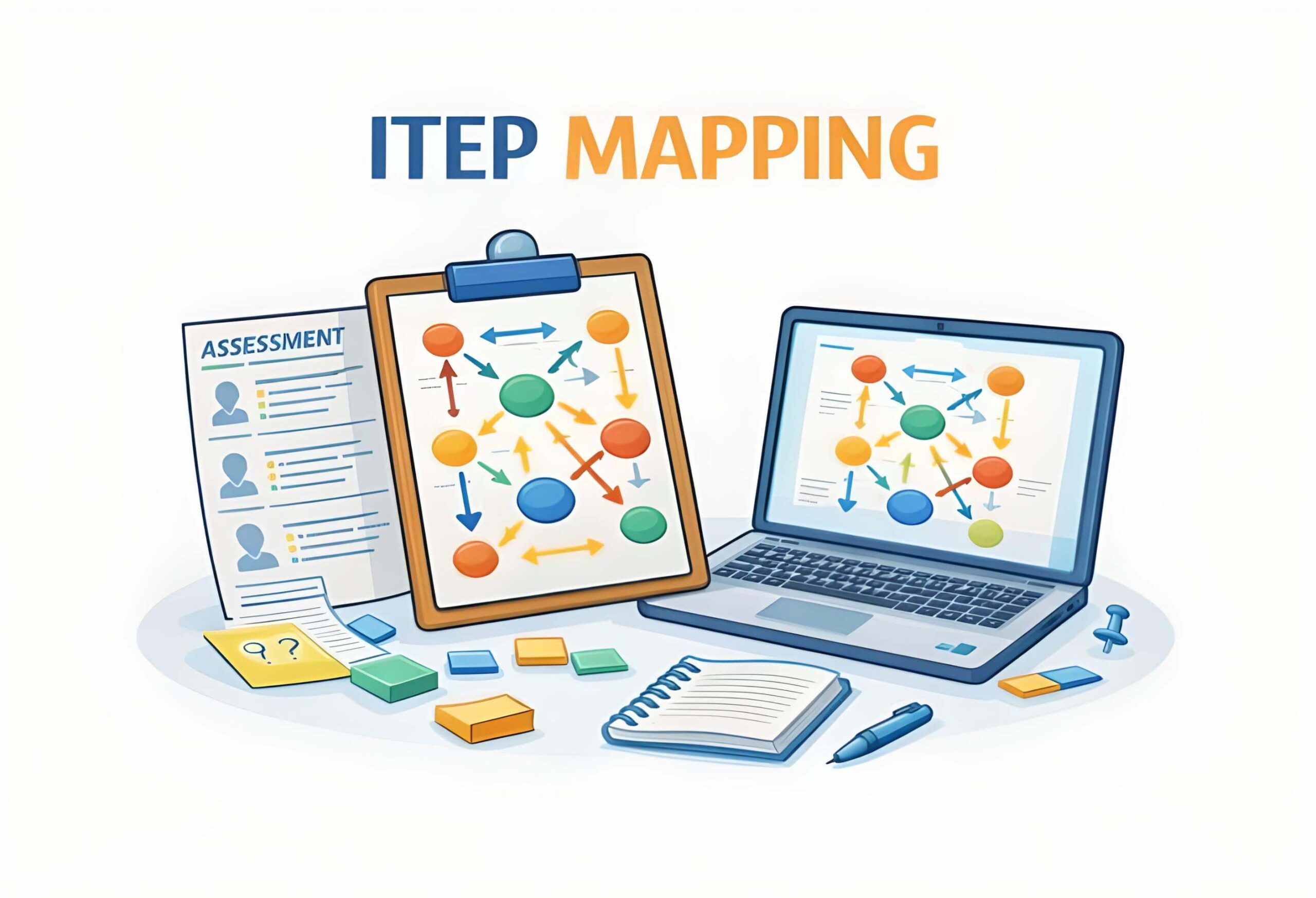
ITEP Training. This online course focuses on ITEP Mapping and how to implement this into recovery-orientated care planning. Participants can be from a variety of services or new to the field. Former participants have include drug workers, managers, social workers, volunteers and students.
Build the therapeutic relationship.
Build engagement with the care planning process.
Identify, set and agree initial treatment goals.
Work with clients to refine treatment goals.
Work with clients to develop recovery capital.
Initiate and maintain changes in substance use ( lapse / relapse).
Work with clients as they exit formal treatment.
Aims and objectives
This introductory level study day will give participants a basic understanding of ITEP and node link mapping tools and offers attendees the opportunity to practice using these tools with other learners.
Describe the role of ITEP and node link mapping tools.
Demonstrate how to use some basic mapping techniques.
Identify how they would implement these principles into their practice.
Identify how they would implement theses principles into recovery-orientated care planning.
Capability Framework Alignment
This course aligns with the Capability Framework for the Drug and Alcohol Treatment and Recovery Workforce (NHS England/ OHID, 2024), which underpins the 10-Year Strategic Plan for the Drug and Alcohol Treatment and Recovery Workforce 2024–2034.
| Capability Domain (NHS England / OHID, 2024) | Framework Section |
| Knowledge of ITEP (Integrated Treatment Effectiveness Protocol) and node-link mapping as evidence-based psychosocial tools within drug and alcohol treatment and recovery | Drug and Alcohol Worker: Application of Knowledge |
| Ability to use node-link mapping techniques — including free maps, information maps, guiding maps and strength-based maps — in direct work with clients | Drug and Alcohol Worker: Harm Reduction, Treatment and Recovery |
| Ability to build and sustain a therapeutic relationship through collaborative, client-centred mapping approaches that promote engagement and openness | Drug and Alcohol Worker: Engagement, Assessment and Care Planning |
| Ability to deliver evidence-based psychosocial interventions including node-link mapping, goal-setting and strength-based approaches to support treatment and recovery | Drug and Alcohol Worker: Harm Reduction, Treatment and Recovery |
| Ability to work collaboratively with clients to identify, articulate and develop personal, social and community recovery capital through structured mapping | Drug and Alcohol Worker: Engagement, Assessment and Care Planning |
| Ability to develop, implement and regularly review personalised, co-produced recovery-oriented care plans informed by ITEP mapping principles | Drug and Alcohol Worker: Engagement, Assessment and Care Planning |
| Recovery-oriented approach — embedding strength-based and recovery capital principles into care planning and direct practice | Underpinning Principle: All Roles |
| Challenging stigma — using collaborative tools to shift power dynamics and promote agency for people in treatment and recovery | Underpinning Principle: All Roles |
| Underpinning Principles Embedded in This Course Trauma-informed care • Recovery-oriented approach • Evidence-based practice • Person-centred working • Forming a working alliance • Therapeutic optimism • Challenging stigma • Co-occurring needs and multidisciplinary working |