
This course is now delivered online via Zoom and Microsoft Teams. Please enquire for details.
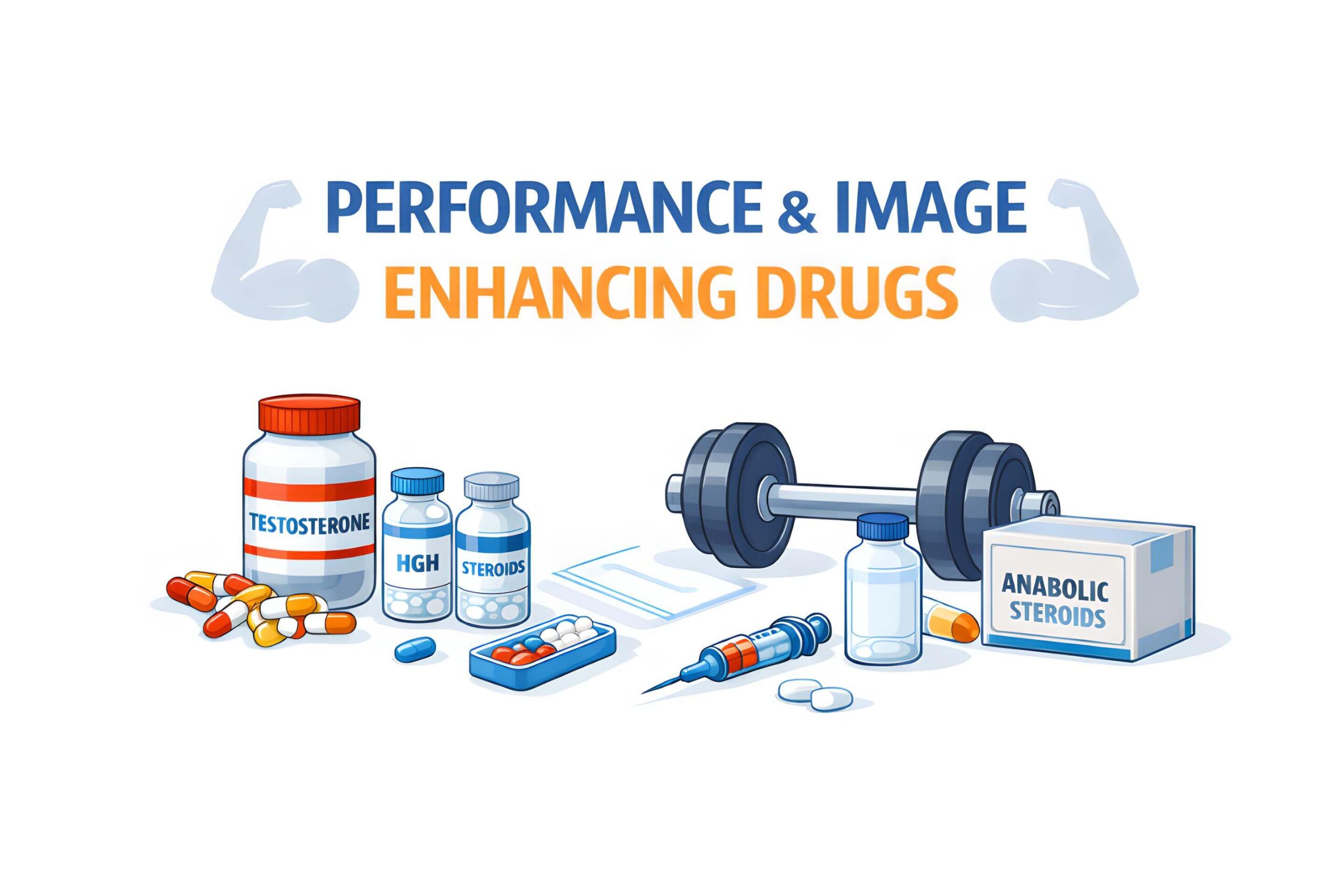
Steroids as we know them were first made in the 1930’s. Before this people regularly used other substances such as amphetamine and cocaine to boost energy and performance. Today individuals take a range of image enhancing drugs with an over concern about how they look, rather than how they perform.
Course description
The course covers:
PIEDS throughout history and popular culture
Popular PIEDS and why people use them
How PIEDS work – A biology lesson
Cost and benefit analysis of PIEDS
Safer Injecting
Reducing Harm
PCT – Examples of PCT to take, how to use it, why you should use it
The Law
Developing your service
Aims and objectives
• Increase knowledge and awareness of the issues relating to steroids and other performance and image enhancing drugs (IPEDs/PIEDs)
• Increase knowledge of how steroids and IPEDs are used, including cycles, stacks and SARMs
• Understand the concept of looksmaxxing and its relationship to IPED use among young people
• Understand how steroids and IPEDs work — pharmacology and effects on physiology and neurology
• Understand the possible effects on physical health and mental health, including dependency
• Increase knowledge of harm reduction approaches and safer injecting guidance for steroid users
• Understand post-cycle treatment (PCT) and available resources and referral pathways
• Increase confidence and capability development in working with this client group
Target audience
This course is primarily targeted at drug and alcohol services who are coming into contact with individuals who are using performance & image enhancing drugs. It will be also of interest to those who wish to further their knowledge in this area.
Capability Framework Alignment
This course aligns with the Capability Framework for the Drug and Alcohol Treatment and Recovery Workforce (NHS England/ OHID, 2024), which underpins the 10-Year Strategic Plan for the Drug and Alcohol Treatment and Recovery Workforce 2024–2034.
| Capability Domain (NHS England / OHID, 2024) | Framework Section |
| Knowledge of the nature, prevalence and patterns of steroid and IPED/PIED use in the UK, including anabolic steroids, SARMs, peptides and human growth hormone, and emerging trends among gym and fitness communities | Drug and Alcohol Worker: Application of Knowledge |
| Knowledge of how steroids and IPEDs work — including pharmacological, endocrine and neurological effects — and the implications for physical and mental health | Drug and Alcohol Worker: Application of Knowledge |
| Knowledge of the health risks associated with steroid and IPED use, including cardiovascular damage, hormonal disruption, liver toxicity, dependency and psychiatric effects | Drug and Alcohol Worker: Application of Knowledge |
| Knowledge of looksmaxxing culture and its relationship to body dysmorphia, online influencer communities and IPED use among young men | Drug and Alcohol Worker: Application of Knowledge |
| Ability to provide evidence-based harm reduction advice for steroid users, including safer injecting guidance, NSP access, BBV prevention and monitoring of health markers | Drug and Alcohol Worker: Harm Reduction, Treatment and Recovery |
| Ability to provide information and support around post-cycle treatment (PCT) and to refer clients to appropriate endocrine, GP and specialist services | Drug and Alcohol Worker: Harm Reduction, Treatment and Recovery |
| Ability to engage sensitively and without stigma with steroid and IPED users, who may not identify with traditional drug treatment services | Drug and Alcohol Worker: Engagement, Assessment and Care Planning |
| Recovery-oriented approach — supporting steroid and IPED users to build health literacy, reduce risk and access appropriate support | Underpinning Principle: All Roles |
| Challenging stigma — recognising the unique stigma experienced by IPED users and how this can be a barrier to accessing needle exchange and other services | Underpinning Principle: All Roles |
| Underpinning Principles Embedded in This Course Trauma-informed care • Recovery-oriented approach • Evidence-based practice • Person-centred working • Forming a working alliance • Therapeutic optimism • Challenging stigma • Co-occurring needs and multidisciplinary working |