
This course is now delivered online via Zoom and Microsoft Teams. Please enquire for details.
Mental health and drug and alcohol use poses many challenges for professionals. Workers may feel unskilled or unable to provide adequate support in dealing with this complex area, with services often in disagreement in what are causing the problems.
Course description
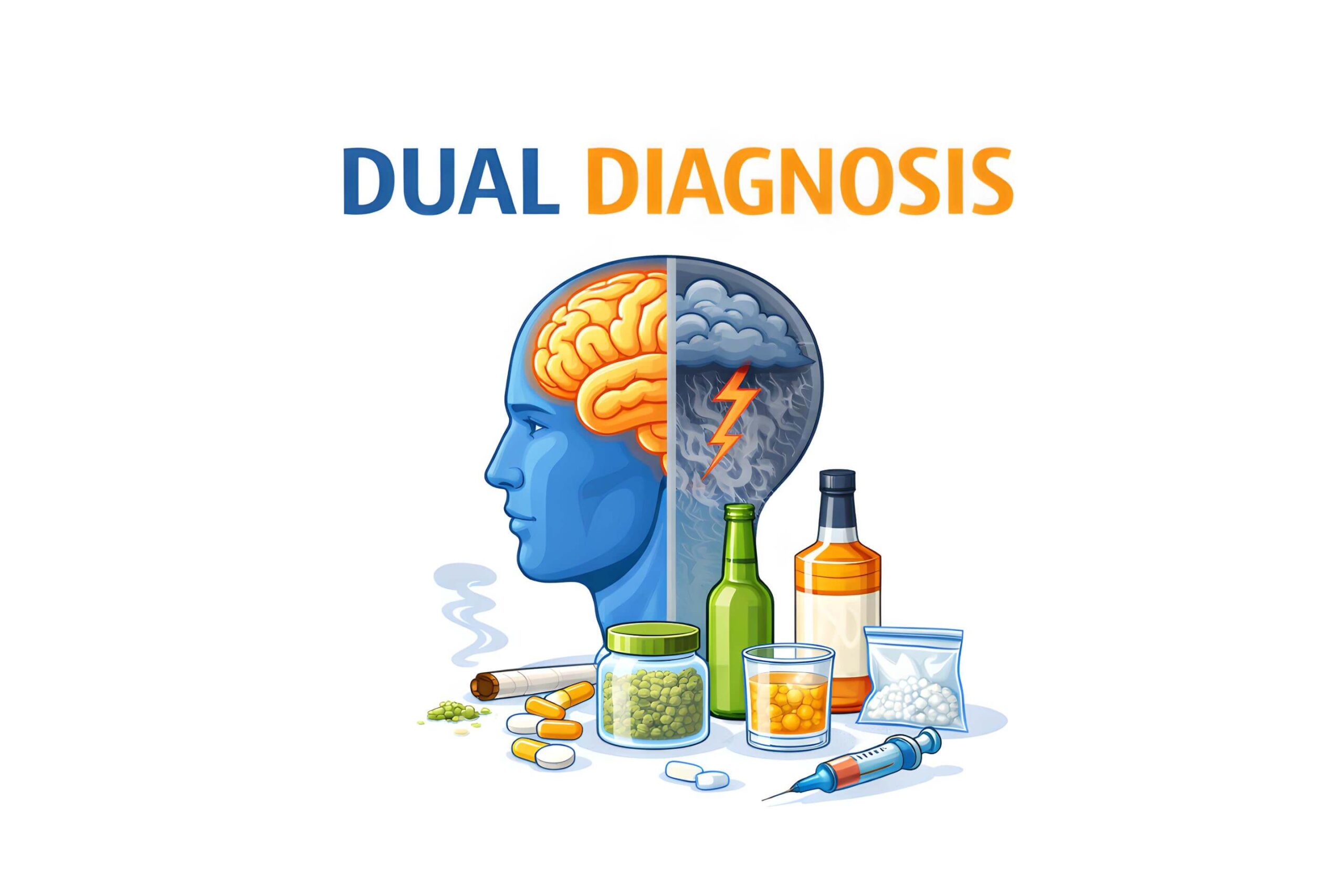
Dual Diagnosis training course. This course focuses on drug use and mental health (dual diagnosis). The course aims to provide information on how drugs, alcohol and mental health issues interrelate and how to work effectively with this client group.
Target audience
Workers in contact with mental health clients using illegal drugs
Community Mental Health Teams
General Practitioners, Practice Nurses, Accident and Emergency Staff
Social Workers, Supported Housing Workers, Probation Staff
Aims and objectives
By the end of the course, participants will be able to:
• Examine terminology around dual diagnosis and how different terms alter their meaning depending on work role and service context
• List ways in which patterns of substance use can impact on a client’s mental health
• Describe how drugs and alcohol may negatively affect mood, emotional states and psychiatric wellbeing
• Understand the role of brain chemistry, chronic stress and trauma in the development of co-occurring disorders
• Understand classification systems and frameworks used in dual diagnosis practice
• Review and develop working protocols, information sharing and referral pathways between mental health and drug and alcohol services
Capability Framework Alignment
This course aligns with the Capability Framework for the Drug and Alcohol Treatment and Recovery Workforce (NHS England/OHID, 2024), which underpins the 10-Year Strategic Plan for the Drug and Alcohol Treatment and Recovery Workforce 2024–2034.
| Capability Domain (NHS England / OHID, 2024) | Framework Section |
| Knowledge of the nature and prevalence of co-occurring mental health and substance use disorders (dual diagnosis) in the UK, including their interaction and mutual reinforcement | Drug and Alcohol Worker: Application of Knowledge |
| Knowledge of how substances affect brain chemistry, neurological function and mental health, including the relationship between drug and alcohol use and conditions such as depression, anxiety and psychosis | Drug and Alcohol Worker: Application of Knowledge |
| Knowledge of the role of chronic stress, adverse childhood experiences (ACEs) and trauma in the development and maintenance of co-occurring disorders | Drug and Alcohol Worker: Application of Knowledge |
| Ability to deliver and support evidence-based interventions for clients with co-occurring disorders, including trauma-informed and psychosocial approaches | Drug and Alcohol Worker: Harm Reduction, Treatment and Recovery |
| Ability to develop and implement effective working protocols, information sharing agreements and referral pathways between drug and alcohol and mental health services | Drug and Alcohol Worker: Engagement, Assessment and Care Planning |
| Recovery-oriented approach — working with individuals to build personal, social and community recovery capital alongside mental health and substance use support | Underpinning Principle: All Roles |
| Challenging stigma — being alert to the compounded stigma faced by people with co-occurring mental health and substance use disorders | Underpinning Principle: All Roles |
| Underpinning Principles Embedded in This Course Trauma-informed care • Recovery-oriented approach • Evidence-based practice • Person-centred working • Forming a working alliance • Therapeutic optimism • Challenging stigma • Co-occurring needs and multidisciplinary working |